Waste on a construction site is not just an environmental headache. It is a cost, a time sink and a reputational risk. Materials that arrive, get damaged, or are sent straight to landfill literally represent money that has been thrown away. At the same time, trying to be too cautious can slow work down, making projects more expensive in other ways.
The good news is that cutting waste does not necessarily mean you have to compromise speed. The best systems make waste reduction part of the workflow rather than an extra task. With a little planning, better material handling, and the right partners, you can reduce waste, keep the site moving and improve margins.
Today we will break down practical steps you can take to reduce waste on construction projects of any size, from refurbishments to full builds. These are simple, reliable tactics that work on-site, save money and keep programmes on track.
Start with a clear plan
The moment a project moves from idea to site, waste planning should be part of the process. That starts at estimation and continues through to completion.
A simple, effective way to do this is to create a short Site Waste Management Plan. It does not need to be long or complicated. It should simply set out what materials you expect to use, where they will be stored, how offcuts will be handled and what you will do with surplus materials.
When you estimate materials, build in realistic wastage rates based on experience rather than guesswork. For example, tile installers know to add a percentage for cuts and breakage. Plasterers know that larger areas involve some trimming. Using accurate allowances prevents overordering, which is one of the biggest causes of waste.
Make waste reduction part of your contract conversations too. Suppliers and subcontractors who understand your goals for minimal waste are more likely to help you meet them.
Order smarter, not later
Ordering plays a huge role in waste. There are two mistakes commonly made. The first is overordering to avoid running out. The second is ordering everything too early and storing it on site where it gets damaged.
Both can be avoided with better timing and better supplier relationships. If you work with reliable suppliers who offer short lead times, you can order smaller, more frequent deliveries. This reduces the risk of materials sitting in the rain, getting scuffed or being moved around the site and damaged.
Ask suppliers about return policies too. Many will accept unopened pallets or boxes for credit if you return them quickly. That gives you flexibility without committing to wasteful overstock.
Also think about consolidated deliveries. If you can take a single delivery for several trades on one day, you reduce handling and the risk of damage in multiple handovers.
Store materials to protect them
On site storage is where many materials meet their end. Tiles get broken, plasterboard gets wet, bags of cement go hard. A small investment in good storage pays off quickly.
Cover pallets with breathable sheeting rather than plastic that traps condensation. Keep bags off the floor on pallets. Store fragile items like tiles and glass under cover and away from high traffic areas. Label everything clearly so trades are not rummaging through pallets and causing accidental damage.
Good storage also saves time. When materials are organised and easy to find, trades spend less time hunting and more time working.
Segregate waste at source
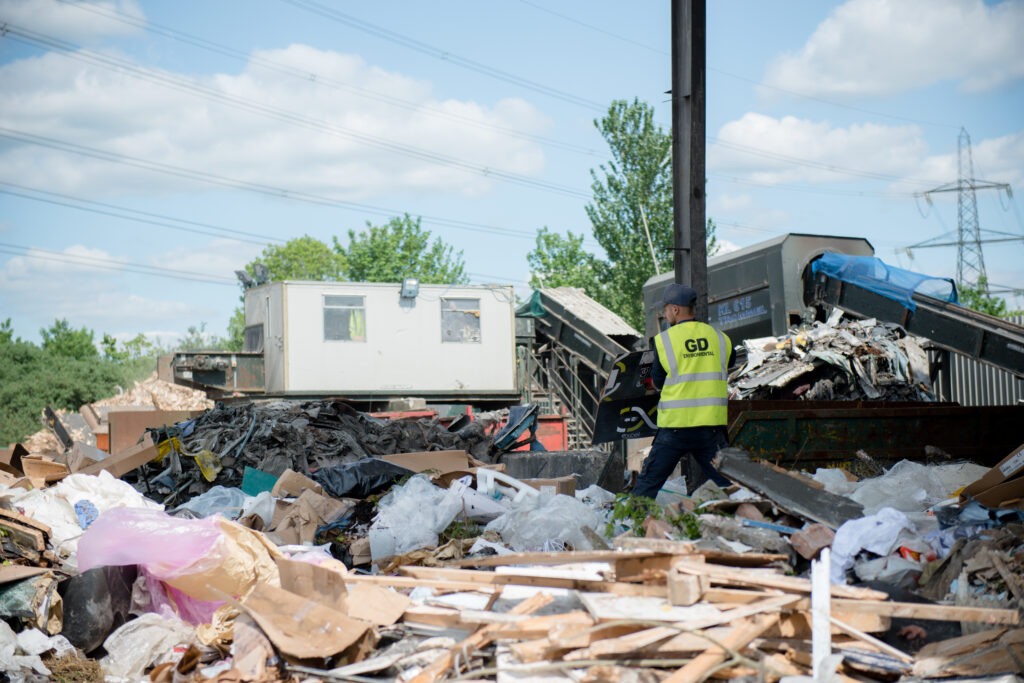
The idea of a single skip for everything might sound convenient, but it is expensive and inefficient. Mixed waste is costly to process and far less likely to be recycled.
A simple segregation system solves this. Provide clearly labelled skips or containers for timber, clean packaging, mixed rubble and hazardous items. Keep them close to where waste is produced so trades use them, and make sure the contractor or site manager enforces the system.
Training helps. If workers understand why segregation matters and see how easy it is, compliance rises quickly. It also makes recycling simpler and reduces the risk of contaminated loads being rejected by recycling facilities.
Using a specialist waste partner such as GD makes segregation even more effective. We can advise on the optimal number and type of containers, collect them on schedule and ensure materials are reprocessed rather than landfilled.
Reuse and choice of materials
Before you consign anything to waste, ask whether it can be reused or repurposed. On refurbishments especially, materials such as bricks, doors, sanitaryware or hard landscaping can be stripped out carefully and reused on site or in other projects.
When you specify materials, pick products designed for modular use and simplicity. Large format tiles might look modern but they create more waste if cuts are numerous. Pre-cut components and standardised sizes reduce offcuts. Where possible, choose products that are recyclable at end of life.
Also think about returnable packaging. Some suppliers will take back crates, pallets and other packaging for reuse. This reduces both on-site rubbish and the carbon associated with new packaging.
Cut with care
A surprising amount of waste comes from poor cutting technique. Measuring once and cutting once might be an old rule, but it still matters.
Encourage tradespeople to take their time on measuring and to set up dedicated cutting areas with correct tools. Sharp blades, the right saws and proper supports reduce breakage and produce cleaner cuts that fit the layout better. That reduces the number of rejects and the time spent adjusting badly cut pieces.
For tile and stone, invest in good quality cutters and train the team on their use. For timber, mark up pieces to reduce guesswork and avoid mistakes. Time invested in training pays back in fewer unusable scraps.
Use offcuts creatively
Offcuts are not always rubbish. Short lengths of timber make great blocking or bracing. Small areas of leftover tile can form a patch pack for repairs. Offcuts of timber can be used for packing or temporary supports.
Set up a small tidy area where offcuts are sorted by material and size. When trades can find useful pieces quickly, they are less likely to cut into fresh stock. This saves time and reduces demand for new materials.
Keep quality control tight
Quality control reduces rework, which is one of the largest causes of waste. If a job is done wrong and has to be stripped out and redone, you have doubled the waste and the labour.
Make sure supervisors check work as it goes rather than leaving everything to the final snag. Small issues spotted early are fixed quickly and cheaply. Regular inspections reduce the chance of major rework and the resulting waste.
Bring the supply chain into the conversation
Many contractors see waste as a site problem only, but suppliers and manufacturers play a part too. Speak with your supply chain about how packaging can be minimised, whether bulk deliveries are possible, and whether returns are accepted.
Suppliers that understand your approach to waste can help by offering materials in sizes and formats that reduce offcuts, or by providing joint deliveries to reduce handling. Working with suppliers who share your objectives simplifies the whole process.
Monitor, measure and feed back
You cannot manage what you do not measure. Track the amount and type of waste you generate on each project and use that data to identify problem areas.
A simple log works well. Record skips collected, weights if available, and what most of the waste is. Over a few projects the patterns become clear. Maybe one specific trade consistently produces excess timber waste. Maybe a supplier’s packaging is the issue. Once you spot a pattern you can take targeted action.
Share the results with the team. When workers can see the savings and the environmental impact of their behaviour, they are more likely to sustain good habits.
Make training part of the budget
Good practice is only as good as the team that follows it. Training does not need to be long or expensive. Short toolbox talks on correct storage, measuring, cutting and segregation are enough to change behaviour.
Include simple visual reminders on site. Think, signs above skips showing what goes in and what does not. Quick checklists for storage and deliveries. While these things take a little time to set up, once the practices become routine they save time rather than costing it.
Be realistic about hazardous waste and compliance
Some waste must be handled specially. Asbestos, contaminated soils, certain adhesives and solvents are hazardous and require licensed handling. Trying to cut corners here is dangerous and illegal.
Plan for hazardous waste properly in your waste plan. Know what will need specialist handling and book it early. We will provide safe collection and documentation so you remain compliant and avoid dangerous contamination that could disrupt the whole job.
Partner with the right waste company
A good waste partner makes reducing waste easier. At GD we can advise on the best mix of skips and containers, run recycling programmes, take back reusable materials and provide documentation for compliance.
Like any decent partner, we focus on reprocessing and high recycling rates rather than simple disposal. We can support hazardous waste, tankering, drainage or specialist cleaning which means fewer subcontractors and a simpler workflow.
In South Wales, we offer regional facilities and strong recycling performance which again is invaluable. We understand local rules, offer practical collection options and help you meet environmental targets.
Reducing waste on construction sites is not about adding tasks to your crew. It is about smarter thinking. With better planning, smarter ordering, protected storage and a culture that values reuse and accuracy, you can cut waste without slowing the programme.
Small changes add up. Better cut technique, slightly smaller orders, a tidy area for offcuts and a clear segregation system will save money and reduce delays caused by rework. Measure what you do, make the data visible, and make waste reduction part of how you run every job.
At GD we understand construction realities and can help you reduce both cost and environmental impact. We can also offer on site advice, segregation solutions and high recycling rates is a good place to start. We become part of your team rather than an afterthought, and that makes all the difference. To learn more click get a quote now or get in touch on the number at the top right of the website.