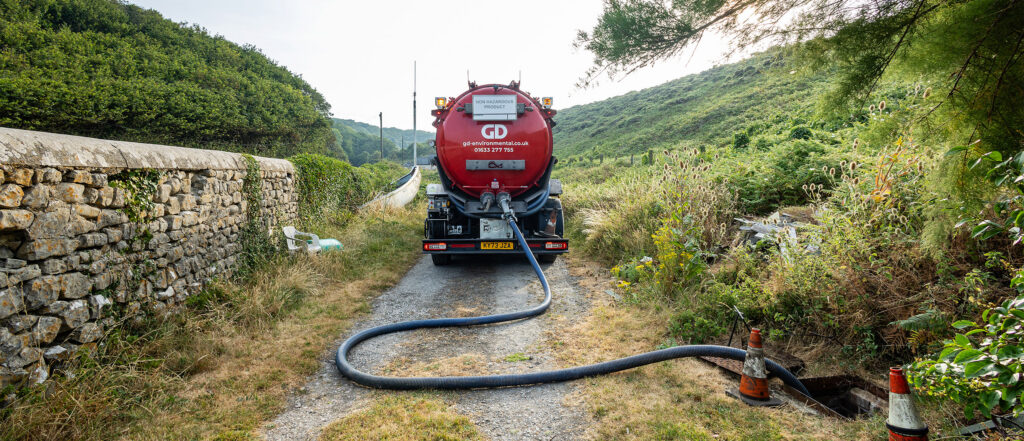
If your site has a car park, a loading bay, a vehicle maintenance area, or any kind of industrial process that produces oily or contaminated water, the chances are it also has an interceptor. If so, that interceptor needs regular cleaning to work properly, stay compliant, and avoid becoming a costly problem.
What Is an Industrial Interceptor?
An interceptor, sometimes called a separator or oil interceptor, is an underground chamber installed in a drainage system to prevent hydrocarbons, oils, fuels, and other contaminants from entering the surface water drainage network or a watercourse. In short, its job is to catch the pollutants that inevitably end up on hard standing areas before they can cause environmental damage downstream.
Most interceptors work on a simple physical principle. Contaminated water flows into the chamber, where the difference in density between water and oil causes the two to separate. Oil and lighter hydrocarbons float to the surface, accumulated sludge and sediment sink to the bottom, and the cleaner water in between flows out through an outlet pipe. The chamber retains the pollutants until they are removed during a cleaning service.
There are several types in common use. Full retention interceptors hold all the water that enters until it has separated, making them the most effective option for sites with high pollution risk. Bypass interceptors allow a proportion of flow to bypass the separator during heavy rainfall, when incoming flow exceeds the chamber’s capacity, and are typically used where the risk of pollution during storm events is lower. Class 1 and Class 2 separators are defined by their performance standards under British Standard BS EN 858, with Class 1 achieving a lower residual oil concentration in the outlet.
The right type and size of interceptor for a particular site depends on the nature of the activity carried out there, the volume of runoff expected, and the sensitivity of the receiving watercourse or drainage system.
Which Sites Need an Interceptor?
Interceptors are a requirement on a wide range of commercial and industrial sites. Common examples in and around Cardiff, Newport and across South Wales include:
- Petrol stations and fuel forecourts, where fuel spills and vehicle drips are routine and the risk of hydrocarbon contamination of drainage is high.
- Commercial vehicle washing facilities, including those at haulage depots, bus garages, and plant hire sites.
- Vehicle maintenance workshops, garages, and MOT centres, where oil changes, brake dust, and workshop runoff create a persistent contamination risk.
- Car parks serving commercial, retail, or industrial premises, particularly larger multi storey or surface level sites with significant traffic volumes.
- Industrial sites where process water comes into contact with oils, lubricants, or other hydrocarbons.
- Loading and delivery areas at warehouses and distribution centres, where vehicle activity generates contaminated runoff.
If your site discharges surface water to a watercourse, a soakaway, or the public sewer, and that surface water could come into contact with oils or hydrocarbons, you almost certainly have a regulatory obligation to manage contamination at source. An interceptor is typically how that obligation is met.
Why Regular Cleaning Is Non Negotiable
An interceptor that is not regularly cleaned stops working. This is not a gradual degradation in performance that you might notice over time. It is a process that happens as the chamber fills with accumulated sludge and the oil layer at the surface grows thick enough to break through into the outlet. At that point, the interceptor is no longer intercepting anything. It is simply passing contaminated water directly into the drainage system.
The consequences of this range from inconvenient to serious.
From an environmental perspective, hydrocarbons entering a watercourse are acutely toxic to aquatic life and can cause significant, visible damage quickly. Even small volumes of oil can contaminate large volumes of water. Natural Resources Wales and the Environment Agency take pollution incidents seriously, and they have the powers to investigate, prosecute, and impose significant penalties on those responsible.
From a regulatory perspective, the Environmental Permitting (England and Wales) Regulations 2016 and the Water Resources Act 1991 both place obligations on site operators to prevent pollution of controlled waters. Allowing contaminated water to discharge from your site because a poorly maintained interceptor has failed is not a defence. The duty to prevent pollution rests with the site operator, and the condition of drainage infrastructure is part of that duty.
From an operational perspective, a full or failed interceptor can cause drainage problems across the site, backing up surface water drainage and creating flooding risk during heavy rain. The cost of dealing with a pollution incident, including clean up costs, regulatory investigation, and reputational damage, is invariably greater than the cost of a routine maintenance programme.
How Often Should an Interceptor Be Cleaned?
The right cleaning frequency depends on the site. A high traffic fuel forecourt with multiple pump positions generates far more contamination than a medium sized car park serving a retail unit. A vehicle maintenance workshop producing significant volumes of waste oil presents a different risk profile to a loading bay at a food distribution warehouse.
As a general guide, most interceptors on active commercial sites benefit from cleaning at least once a year. Sites with higher contamination loads, or those discharging to particularly sensitive receiving environments, may require more frequent service. The condition of the interceptor at the point of each clean is the most reliable indicator of whether the current frequency is adequate: if the chamber is close to capacity at the point of cleaning, the interval should be reduced.
A reputable contractor will inspect the chamber during each visit and advise on whether the current maintenance schedule is appropriate for the volume and type of contamination being generated.
What Does Industrial Interceptor Cleaning Involve?
A professional interceptor cleaning service covers more than simply pumping out the contents of the chamber. Carried out properly, it involves the following:
- The tanker arrives on site and is positioned to give access to the interceptor chambers. Covers are removed and the chamber is assessed before any work begins, including checks on the structural condition of the chamber, the condition of the coalescing media if fitted, and the current depth of oil and sludge.
- Vacuum suction equipment is used to remove the accumulated sludge from the base of the chamber. The oil layer at the surface is then removed separately. Depending on the condition of the chamber and the type of interceptor, high pressure water jetting may be used to clean the chamber walls and dislodge material that suction alone cannot shift. This is particularly important where biofilm or emulsified material has adhered to the chamber surfaces.
- Once cleaned, the chamber is inspected to confirm it is operating correctly: inlet and outlet pipes are clear, the chamber is structurally sound, and any coalescing media is in serviceable condition. Any concerns about the chamber’s condition are reported to the site contact.
- All waste removed from the interceptor, which is classified as hazardous waste under UK regulations, is transported in a licensed tanker to a licensed treatment facility. At GD Environmental, waste from interceptor cleans is treated at our water treatment facility in Newport or at a fully licensed partner facility. The appropriate hazardous waste documentation, including the consignment note required under the Hazardous Waste (England and Wales) Regulations, is completed and provided to the client as part of the service.
Compliance and Documentation
For businesses operating in Cardiff and across Wales, keeping records of interceptor maintenance is important for several reasons. If a pollution incident occurs and is investigated by Natural Resources Wales, evidence of a regular, properly documented maintenance programme demonstrates that the site operator was taking their environmental obligations seriously. It does not guarantee immunity from enforcement, but it is a material consideration in how any investigation is handled.
Records should include the date of each service, the volume and type of waste removed, the name and licence number of the waste carrier, and the hazardous waste consignment note reference. A reputable contractor will provide all of this documentation as standard. If yours does not, that is worth noting.
For sites subject to an environmental permit or an abstraction licence, interceptor maintenance may be a specific condition of that permit. Checking the requirements of your permit and ensuring your maintenance programme meets them is a straightforward step that avoids unnecessary regulatory risk.
Industrial Interceptor Cleaning in Cardiff and South Wales
GD Environmental has been providing interceptor cleaning and liquid waste services across South Wales and the South West since 2003, serving over 5,000 customers per year. Our tanker fleet and specialist drainage team handle everything from routine planned maintenance to emergency callouts, and all waste is transported and treated in full compliance with hazardous waste regulations.
We carry out interceptor cleaning at a wide range of commercial and industrial sites across Cardiff, Newport, Swansea, and throughout South Wales, including forecourts, vehicle maintenance workshops, car parks, industrial facilities, and local authority sites.
If you would like to discuss your site’s requirements, arrange a planned maintenance programme, or book an interceptor clean, get in touch with our team on 01633 277 755 or visit our Drainage, Sewerage and Tankering page for more information. We are happy to advise on the right service frequency for your site and to provide a clear quote before any work begins.