The phrase “confined space entry” appears in contracts, risk assessments, and service specifications with some regularity, but it is not always well understood by the clients and facilities managers who encounter it. Knowing what confined space work actually involves, when it is required, and what the legal obligations are around it, is useful for any business that manages property, infrastructure, or drainage systems.
What Is a Confined Space?
The definition under the Confined Spaces Regulations 1997 is broader than most people expect. A confined space is not defined primarily by its physical dimensions but by the risks it presents. Under the regulations, any place that is substantially enclosed and where there is a reasonably foreseeable risk of serious injury from hazardous substances or dangerous conditions qualifies as a confined space, regardless of how large or small it is.
Examples relevant to drainage and facilities work include manholes, inspection chambers, wet wells, underground tanks, sewers, valve chambers, and interceptors. Less obviously, open topped chambers, poorly ventilated rooms, and deep excavated trenches can also fall within the definition depending on the hazards present.
The risks that create this classification include oxygen deficiency, the presence of toxic or flammable gases, flooding from liquid or free flowing material, fire or explosion, and the risk of entrapment. In drainage environments in particular, hazardous gases such as hydrogen sulphide and methane can accumulate in enclosed spaces with little warning, and oxygen levels can drop rapidly. These are genuinely life threatening conditions, and the statistics bear that out: confined space incidents account for a disproportionate number of fatalities in the drainage industry each year. Critically, those fatalities include not only the workers who enter the space but those who attempt a rescue without the proper training and equipment.
When Is Confined Space Entry Required?
For businesses managing drainage infrastructure, sewage systems, or underground storage, there are a number of situations that typically require confined space entry by a qualified contractor.
Inspection and maintenance of manholes and chambers. Where a CCTV survey cannot provide the full picture, or where physical maintenance work is needed inside a chamber, direct entry is required.
Cleaning and desludging of interceptors and tanks. Grease interceptors, fuel interceptors, and underground storage tanks accumulate sediment and waste over time that cannot always be removed remotely. Physical entry to clean and inspect the interior is periodically necessary.
Pump and equipment maintenance. Wet wells and pump chambers in sewage and surface water systems require periodic maintenance of pumps, sensors, and associated equipment, often requiring entry.
Structural inspection and repair. Where a chamber or underground structure needs visual inspection beyond what a camera can provide, or where repair work needs to be carried out on the fabric of the structure, entry is required.
Emergency response. Blockages, equipment failures, or flooding in enclosed underground systems may require direct entry to resolve the problem where remote methods are insufficient.
What the Regulations Require
The Confined Spaces Regulations 1997 set out clear legal obligations for anyone commissioning or carrying out confined space work. The first and most important principle in the regulations is that entry should be avoided wherever possible. If a task can be completed safely from outside the space, that is the preferred and legally required approach.
Where entry cannot be avoided, the regulations require a suitable and sufficient risk assessment before work begins, identifying all potential hazards and the control measures needed to address them. A safe system of work must be established and followed. This includes appropriate atmospheric monitoring before and during entry, effective ventilation arrangements, the right personal protective equipment for the specific conditions, and clear communication between the operative inside and the team outside throughout the work.
Critically, a rescue plan must be in place before entry begins. This plan must be capable of being executed immediately and without placing additional people at risk. In practice, this means rescue equipment including a tripod, harness, and retrieval line must be on site, not in a depot. For atmospheric hazards, breathing apparatus and emergency supplies must be available. Trained personnel must be ready to respond. Emergency services should not be relied upon as the primary rescue capability, as response times may be too long in oxygen deficient or toxic atmospheres.
Training requirements are also strict. Untrained personnel entering confined spaces is unlawful under UK law. All operatives involved in confined space work must hold appropriate qualifications, and those planning and supervising the work must hold qualifications at the relevant management level.
When Does Drainage Work Become Confined Space Work?
This is a question that comes up regularly, and the answer matters for procurement, risk assessment, and contractor selection.
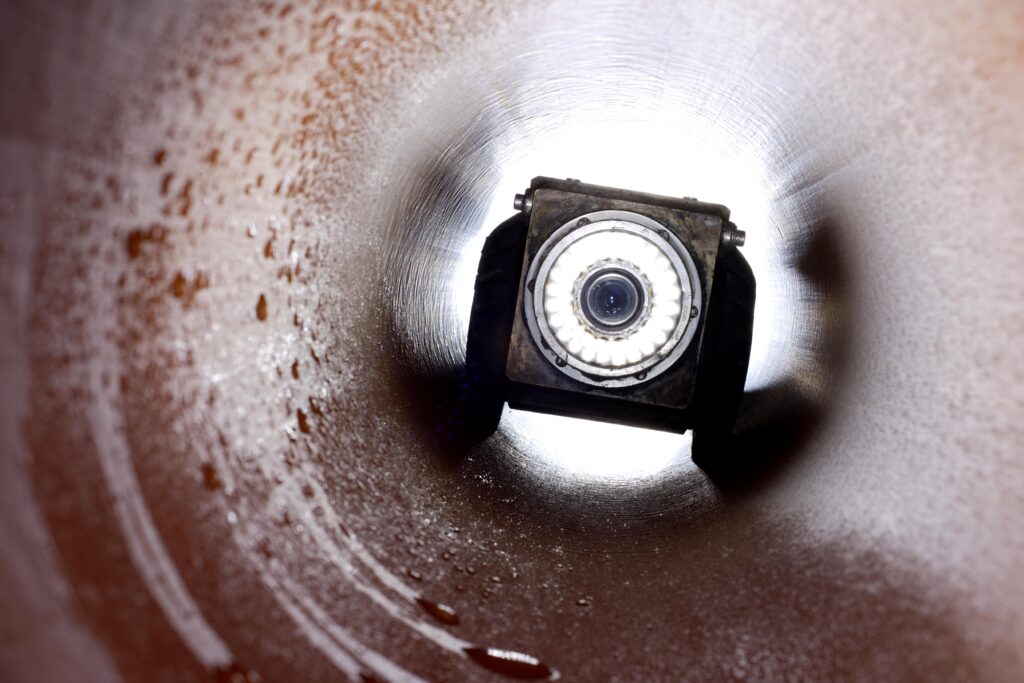
Not all drainage work involves confined space entry. CCTV surveys, high pressure jetting, and much routine drain clearance is carried out entirely from the surface, with no requirement for anyone to enter a chamber or enclosed structure. This work is subject to its own health and safety requirements but does not trigger the specific obligations of the Confined Spaces Regulations.
The threshold is crossed when a person needs to enter a space that meets the regulatory definition, which in drainage terms typically means physically entering a manhole, chamber, tank, or underground structure. It is also important to understand that atmospheric testing alone does not determine whether a space is confined: the classification depends on the hazards that could be present, not only those that are currently measurable. A chamber that tests clear of gases at the point of entry can become dangerous if conditions change during the work, which is why continuous monitoring during entry is a requirement rather than an optional precaution.
For facilities managers and property owners, the practical implication is straightforward: if any part of the planned drainage or maintenance work requires someone to physically enter an enclosed underground structure, the contractor you appoint must be equipped and qualified to do so under the Confined Spaces Regulations. This is not a discretionary standard but a legal one, and responsibility for ensuring the contractor is appropriately qualified sits with the party commissioning the work as well as the contractor carrying it out.
What to Look for in a Contractor
If you need confined space work carried out on your site, the most important question to ask before booking is whether the contractor is properly equipped and qualified for the specific type of space and the hazards present.
At a minimum, you should expect to see a tripod, harness, and gas detection equipment on site before any entry begins. The presence of a minimum of two operatives is standard: one to carry out the work inside and one to act as a top person, maintaining communication and managing the rescue plan from outside. A contractor who turns up with a single operative and no retrieval equipment is not set up to work safely in a confined space, and you should not allow entry to proceed.
Written risk assessments and method statements should be provided before work starts, not after. The contractor should be able to demonstrate relevant training and certification for all operatives involved, and the work should be covered by appropriate public liability insurance.
For drainage related confined space work specifically, the contractor should also hold a valid waste carrier licence if any material is being removed from the space during the job.
GD Environmental’s Confined Space Capability
At GD Environmental, confined space entry has been a core part of our wet waste and drainage service for over 40 years. Our teams are trained and equipped to carry out confined space work safely and in full compliance with the Confined Spaces Regulations 1997, including the gas monitoring, rescue arrangements, and documentation that the regulations require.
We work across a wide range of commercial, industrial, and infrastructure sites throughout South Wales and the South West, carrying out inspection, cleaning, desludging, and maintenance work in manholes, chambers, tanks, interceptors, and sewerage systems of all types.
If you need confined space work carried out on your site, or you are not sure whether a particular job falls within the definition, we are happy to talk it through. Get in touch with our team on 01633 277 755 or visit our Drainage, Sewerage and Tankering page to find out more about what we offer.