You may have seen waste companies talk about their landfill diversion rate and wondered what it actually means in practice. It is one of those terms that gets used a lot in the waste industry but rarely gets explained properly, even though it matters a great deal for both the environment and for businesses trying to manage their waste responsibly.
What Is Landfill Diversion?
Landfill diversion simply means the proportion of waste that is kept out of landfill sites and sent instead to be recycled, reused, treated, or recovered for energy. A landfill diversion rate of 90%, for example, means that only 10% of the total waste collected ends up buried in the ground, with the rest processed through other routes.
The opposite of diversion is disposal. For a long time, burying waste in landfill was the default route for anything that could not be easily recycled. Landfill diversion is about actively reducing that default and finding a better home for as much waste as possible.
Why Landfill Diversion Matters for the Environment
Landfill sites are far from a neutral place to put waste. As organic material breaks down underground without oxygen, it produces methane, a greenhouse gas many times more potent than carbon dioxide over the short term. Landfill sites across the UK are a significant source of these emissions.
Beyond emissions, landfill space itself is limited. Wales and the rest of the UK have been steadily reducing available landfill capacity for years, which makes diverting waste away from landfill not just an environmental choice but a practical necessity.
There is also the question of leachate, the liquid that forms as waste breaks down and can carry pollutants into surrounding soil and water if not properly managed. Keeping waste out of landfill in the first place avoids this risk entirely.
Why Landfill Diversion Matters for Businesses
For businesses, a high landfill diversion rate from your waste provider is not just a nice statistic, it has real practical benefits.
- Compliance and reporting. Many businesses now need to report on their waste and environmental impact, whether for internal sustainability targets, client requirements, or tender applications. A waste provider who can give you clear diversion figures makes this reporting far easier.
- Cost control. Landfill tax has risen steadily for years and continues to make landfill the most expensive disposal route in most cases. Diverting waste towards recycling and recovery routes is usually the more cost effective option as well as the more responsible one.
- Client and tender requirements. Increasingly, local authorities, housebuilders, and larger commercial clients expect their contractors and suppliers to demonstrate strong environmental credentials, including landfill diversion rates, before awarding work.
How We Achieve High Diversion Rates
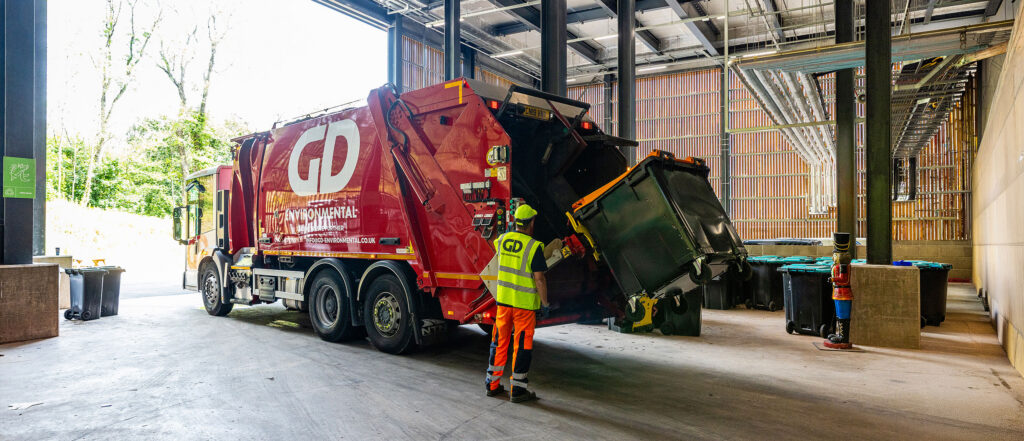
At GD Environmental, we process over 100,000 tonnes of waste each year across our sites in Newport and Pontypool, with a 98% recycling rate. Achieving figures like this comes down to how waste is sorted and processed once it arrives at our facilities.
Dry waste is sorted into separate material streams, including wood, plastics, metals, and cardboard, each sent on for recycling or reprocessing rather than being treated as general waste. Wet waste is treated at our dedicated treatment facility, and hazardous materials are handled separately in line with full regulatory requirements. Even scrap metal and end of life vehicles are processed through our own facilities rather than passed to a third party.
The result is that only a small fraction of what we collect ever needs to go to landfill, and we continue to invest in our sorting and processing capability to push that figure down further.
What Businesses Can Do to Help
While your waste provider does the heavy lifting, how waste is handled on site still makes a difference. Separating recyclable materials before collection, avoiding contamination between waste streams, and working with a provider who gives you proper documentation all help maximise how much of your waste is diverted away from landfill.
Get a Waste Management Quote From GD Environmental
At GD Environmental, we help businesses across South Wales and the South West manage their waste responsibly, with clear reporting on where your waste goes and how much is diverted from landfill. Whether you need a one off collection or a long term waste management plan, our team is happy to talk through the right setup for your site.
Call us on 01633 277 755 or visit our Commercial Services page to find out more, or read more about our wider environmental commitments on our Our Ambition page.