If you have ever been quoted for “high pressure jetting” after a blocked drain and wondered exactly what that involves, you are not alone. Most people know it is the thing that fixes a stubborn blockage, but fewer know how it actually works or why it is often the better option over other methods.
What Is High Pressure Water Jetting?
High pressure water jetting is a method of clearing and cleaning drains and sewer pipes using a controlled, powerful stream of water rather than mechanical tools or chemicals. A specialist jetting machine pumps water through a flexible hose that is fed into the pipe, ending in a nozzle designed to blast water both forward and backward as it moves.
The forward jets cut through blockages and break up debris ahead of the hose. The backward jets propel the hose along the pipe and scour the pipe walls as it goes, pulling loosened material back towards the access point where it can be flushed away or removed.
Depending on the job, water is pumped at pressures that can reach several thousand psi, strong enough to cut through grease, scale, and root growth, but controlled enough not to damage the pipe itself when used correctly by a trained operator.
How the Process Works, Step by Step
- Initial assessment. On larger or more complicated jobs, a CCTV drain survey may be carried out first to see exactly what is causing the blockage and where it sits in the system. This helps the engineer choose the right nozzle and approach rather than guessing.
- Access point. The engineer locates the nearest manhole, inspection chamber, or rodding point and feeds the jetting hose into the pipe from there.
- Jetting begins. The nozzle is sent down the line, cutting and breaking apart whatever is blocking the pipe, whether that is fat and grease, silt, scale, tree roots, or general debris.
- Flushing and clearing. As the hose is pulled back, the backward facing jets flush the loosened material towards the access point, clearing the line fully rather than just punching a small hole through the blockage.
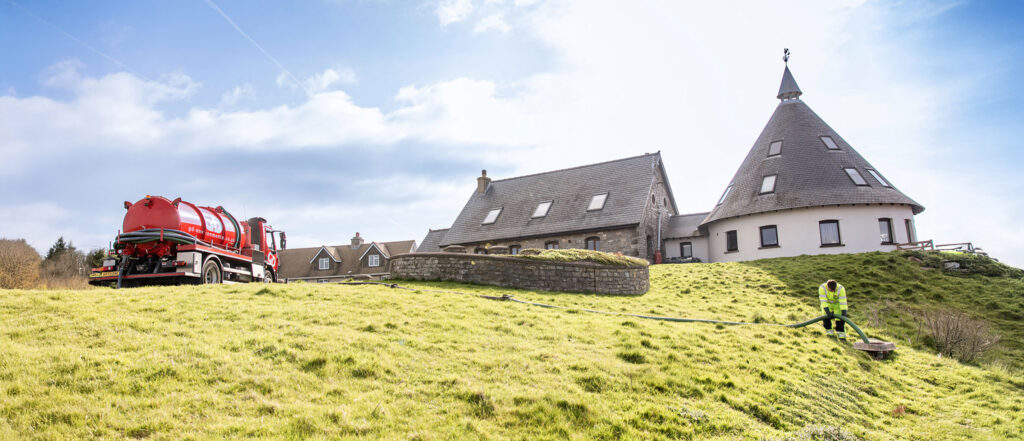
- Removal of waste. On commercial jobs or where there is a large amount of debris, a tanker will often be on site to vacuum up the waste and water, leaving the area clean and the drain flowing properly.
- Final check. A follow up camera survey is sometimes used to confirm the line is fully clear, particularly for commercial clients who need documented proof the work has been completed.
What Can High Pressure Jetting Remove?
Jetting is effective against a wide range of blockages, including:
- Fat, oil, and grease build up (FOG), the leading cause of blockages in commercial kitchens
- Silt and sediment that gradually narrows a pipe over time
- Limescale and mineral scale in older pipework
- Tree root ingress, where roots have grown into pipe joints
- General debris, wipes, and sanitary items that should never have been flushed
Why Choose Jetting Over Other Methods?
Traditional rodding can push through the middle of a blockage without clearing the full width of the pipe, which often means the problem returns within weeks. Chemical drain cleaners can damage older pipework and are harmful to the environment if they end up in the water system.
Jetting clears the entire internal surface of the pipe, not just a narrow channel, which is why it tends to last longer and why it is the standard method used for both reactive repairs and planned maintenance across domestic and commercial properties.
Is Jetting Suitable for All Drains?
In most cases, yes. Jetting is used on domestic household drains, commercial kitchen lines, industrial pipework, and large sewer networks. The main thing that changes between jobs is the pressure, nozzle type, and hose size used, which is why it is worth having an experienced team assess the pipe before starting work rather than applying the same approach to every job.
Get a Jetting Quote From GD Environmental
At GD Environmental, we provide high pressure water jetting, drain unblocking, and CCTV survey services across South Wales and the South West, for both domestic and commercial customers. Our team will always assess the problem properly before recommending the right approach, so you are not paying for more than the job needs.
If you are dealing with a slow drain, a recurring blockage, or want to set up a planned jetting schedule for a commercial site, call us on 01633 277 755 or visit our Drainage, Sewerage and Tankering page to find out more.