In 2017, engineers working in the sewers beneath Whitechapel in East London discovered a solidified mass of fat, wet wipes, nappies, and other waste measuring 250 metres in length and weighing 130 tonnes. It took three weeks to remove, required specialist high pressure jetting equipment, and cost Thames Water a significant sum to deal with. The media named it a fatberg, and the term stuck.
Since then, fatbergs have been found in sewers across the UK, including several in Wales, and the problem has not gone away. Understanding what they are, why they form, and how to prevent them matters both for homeowners who want to avoid a blocked drain and for businesses, particularly those in the food service industry, who have a legal responsibility to manage their waste properly.
What Is a Fatberg?
A fatberg is a solid mass that forms inside sewers and drainage pipes when fat, oil and grease combines with non biodegradable materials such as wet wipes, cotton buds, nappies and sanitary products that have been flushed or washed down drains.
The process works like this. Fat, oil and grease, most commonly from cooking, are poured or washed down kitchen drains in liquid form. As they cool in the pipe, they solidify and stick to the pipe walls. Over time, layer builds upon layer. Non biodegradable items that should never be in the sewer system catch on the build up, and the mass grows. Unlike organic waste, wet wipes and similar products do not break down in water, so they remain intact and continue to trap further fat and debris.
The result is a concrete like obstruction that can grow large enough to completely block a major sewer. In residential areas, fatbergs can cause sewage to back up into homes. In commercial areas, they can affect entire streets.
The Main Causes
Fat, oil and grease from cooking. This is the primary ingredient in almost every fatberg. The fat from frying, roasting, and cooking solidifies quickly once it leaves the heat of the kitchen. Pouring it down the sink, even with hot water, simply moves the problem a few metres further down the pipe before it cools and sticks.
Wet wipes. Even products marketed as “flushable” do not break down in the sewer system at a rate that prevents them from contributing to fatbergs. Standard wet wipes used for cleaning or personal hygiene are particularly problematic and are consistently identified by water companies as a major contributor.
Cotton buds. The thin plastic stems pass straight through toilet traps and end up in the sewer system, where they are perfectly sized to catch on fat deposits.
Cooking cloths and paper towels. These absorb fat and oil during cooking and when flushed or washed into the drain carry that fat directly into the pipe.
Food waste from sinks without proper grease management. Commercial kitchens that allow food particles and greasy water to drain freely without grease interceptors or traps are significant contributors to sewer fatbergs in urban areas.
Why This Matters for Businesses
For commercial premises, the consequences of contributing to a sewer fatberg or causing a blockage in a shared drainage system go beyond inconvenience. Under the Water Industry Act 1991, it is an offence to cause or allow any matter that is likely to cause a nuisance or obstruct a sewer to enter that sewer. Businesses that do not manage their grease waste responsibly can face enforcement action from their water company, including fines.
Food service businesses, including restaurants, cafes, takeaways, hotels, and food production facilities, are expected to have appropriate grease management in place. This typically means grease traps or grease interceptors installed at the point of source, regular emptying and maintenance of those traps, and staff training on what can and cannot go down a drain.
Water companies carry out inspection programmes and can require businesses to install or upgrade grease management equipment if they find evidence of grease entering the sewer system from a particular premises.
How to Prevent Fatbergs at Home
The changes needed at home are straightforward and cost nothing beyond a few minutes of adjusted habit.
Let fat and oil cool and solidify before disposing of it. Pour used cooking fat into an old container, let it set, and put it in the general waste bin. A dedicated fat jar kept near the hob makes this easy.
Never pour fat, oil or grease down the sink. Even a small amount of fat from every roasting tray or frying pan, washed into the same drain over months and years, contributes to build up. Hot water does not prevent this as people often assume: it simply carries the fat a little further along the pipe before it cools and adheres to the walls.
Use a sink strainer. A basic plug hole strainer catches food particles before they enter the drain. Empty it into the food waste or general bin after washing up.
Put the right things in the right bin. Wet wipes, cotton buds, nappies, and sanitary products should never be flushed. The bin is the right place for all of them. If the packaging says flushable, treat that claim with scepticism: the UK water industry has been clear that even these products do not break down quickly enough to prevent sewer problems.
Use enzyme based drain cleaners occasionally. These products use bacteria to break down organic residue in pipes and can help keep kitchen drain runs clear of grease build up between professional cleans. They are not a solution to an established blockage, but as a maintenance measure used monthly or so they are useful.
How to Prevent Fatbergs in a Commercial Setting
For businesses where food is prepared, the standard of grease management required is higher, and rightly so. Commercial kitchens generate significantly more fat and grease per unit of drainage than a domestic kitchen, and the drainage systems serving commercial areas bear that load across multiple premises.
Install and maintain a grease trap or interceptor. A grease trap works by allowing wastewater to cool in a sealed chamber, causing fat and grease to solidify and float to the surface while water flows through underneath. They require regular emptying and maintenance to work effectively. A grease trap that has not been emptied is not managing your grease, it is simply storing it until it overflows.
Schedule regular drain maintenance. High pressure jetting of commercial kitchen drain lines on a scheduled basis removes grease build up before it reaches a stage that causes a blockage. The cost of planned maintenance is almost always lower than the cost of an emergency call out and the disruption of a blocked drain during service hours.
Train your team. The best equipment in the world does not help if staff are pouring fryer fat down the sink at the end of a shift. Clear, simple guidance on what goes in the grease trap, what goes in the bin, and what can go down the drain is a worthwhile investment of twenty minutes.
Keep records. If your water company asks for evidence that you are managing your grease responsibly, being able to show a record of grease trap emptying and drain maintenance demonstrates that you are taking the obligation seriously.
What Happens If a Fatberg Goes Unchecked
The instinct when drains are slow is to ignore it and hope it clears itself. Fat build up does not clear itself. Organic material continues to accumulate, non biodegradable items continue to catch, and the mass continues to grow. What starts as a restriction that slows drainage eventually becomes a full blockage.
Once a fatberg has reached a significant size, clearing it is considerably more difficult and expensive than preventing it would have been. In a domestic drain, a partial blockage that could have been resolved with a single jetting visit can, if left, develop to the point where the pipe walls are coated so thickly that jetting alone is insufficient and sections of pipework need replacing.
In a shared sewer, the consequences extend beyond your own property. A fatberg large enough to block a main sewer can cause sewage to back up into multiple homes and businesses, and the cost of clearing it falls on the water company, which ultimately means it falls on all customers through bills. Water companies take this seriously, which is why enforcement powers exist for businesses that persistently contribute to the problem.
Beyond the practical and financial consequences, sewage backing up into a property is a serious hygiene and health issue. Sewage contains bacteria and pathogens, and a backup into a kitchen, bathroom or ground floor room requires thorough professional clean up, not just the resolution of the blockage itself.
The short version is that the earlier a build up is caught and dealt with, the better the outcome for everyone involved.
What to Do If You Think You Have a Fatberg Problem
If you are seeing the signs of a significant build up, recurring blockages, slow draining across multiple fixtures, foul smells from inspection chambers or internal drains, or sewage backing up, it is worth getting a professional assessment sooner rather than later.
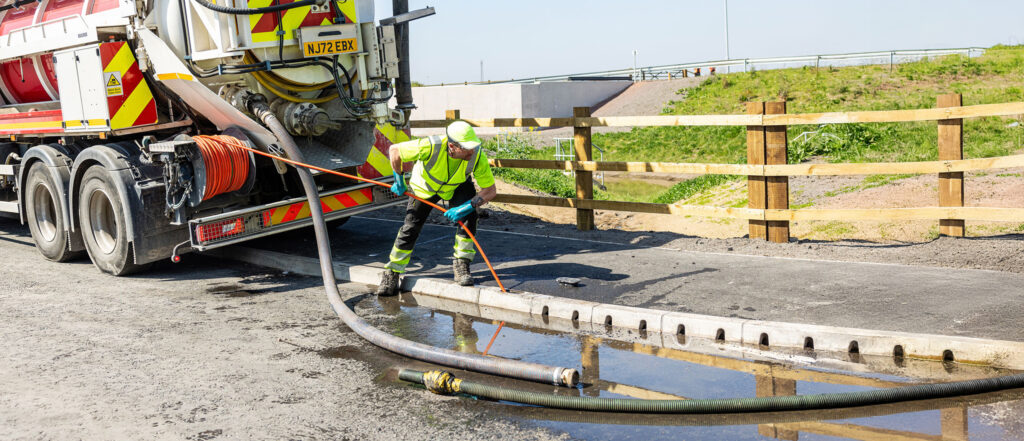
High pressure water jetting can remove fat build up from domestic and commercial drain runs, and a CCTV survey can confirm the extent of the problem and identify whether there is any structural damage to the pipe that needs addressing alongside the clearance.
At GD Environmental, we provide drain jetting and CCTV survey services across South Wales and the South West for both domestic and commercial customers. Our team has over 40 years of experience dealing with drainage problems of every kind, and we are happy to advise on the right solution for your situation.
If you’re concerned about your drains, whether at home or on a commercial site, get in touch with us on 01633 277 755 or take a look at our Drainage, Sewerage and Tankering services to find out more.