Blocked drains are one of those problems that tend to build quietly in the background.
On a commercial site, everything can seem fine until it suddenly isn’t. Water starts draining slowly, unpleasant smells appear, or an outdoor drain begins to overflow. By the time it’s properly noticed, it’s already affecting day-to-day operations.
In reality, most drainage issues develop over time. They’re usually caused by a mix of heavy usage, the type of waste going through the system, and a lack of regular maintenance. Understanding what leads to blockages, and how to deal with them early, can save a lot of disruption later on.
Why commercial sites are more prone to drainage issues
Drainage systems on commercial sites deal with far more demand than those in a typical home.
There’s often a constant flow of water and waste throughout the day, sometimes across multiple areas of a site. Kitchens, toilets, outdoor drainage points, and industrial processes can all feed into the same system. Over time, that level of use puts pressure on the pipework.
Different types of businesses also create very different waste. A restaurant will be dealing with grease and food waste, while a construction site may introduce mud, debris, and runoff into the drains. Without proper management, it doesn’t take long for build up to start forming.
Common causes of blocked drains
Grease and food waste
In commercial kitchens, grease is one of the main causes of drainage problems.
Fats and oils often go down the drain as liquids, but they don’t stay that way for long. As they cool, they begin to solidify and stick to the inside of the pipes. Over time, this creates a layer that narrows the pipe and traps other materials passing through.
Even where grease traps are used, they don’t catch everything. Small amounts still make their way into the system, and that gradual build up is often what leads to slow drainage and eventual blockages.
Silt and debris from outdoor areas
For construction sites, industrial yards, and commercial premises with external drainage, the issue is often physical debris rather than grease.
Mud, sand, leaves, and general waste can all enter the drainage system, particularly during bad weather or busy periods on site. This material tends to settle in low points within the pipework, reducing the space available for water to flow.
Unlike grease, which builds slowly, debris can accumulate quite quickly. Once enough of it collects, the system starts to struggle, and water may begin to pool on the surface.
Incorrect use of the drainage system
A lot of blockages come down to what people put into the drains.
In shared commercial environments, it’s common for items to be disposed of incorrectly. Materials that don’t break down easily, such as wipes or packaging, can get caught in the pipework, particularly if there is already some build up present.
It only takes a small amount of the wrong material to start causing issues, especially when combined with other factors like grease or residue.
Gradual internal build up
Even in systems that are used correctly, build up can still occur over time.
Minerals, soap residue, and general waste can form a coating inside the pipes. This doesn’t usually cause an immediate blockage, but it does reduce the diameter of the pipe. Once that happens, water flow becomes less efficient, and it becomes easier for debris to get caught.
This is often why drainage issues seem to appear suddenly, when in reality the problem has been developing for some time.
Structural problems within the pipework
In some cases, the issue isn’t what’s inside the pipe, but the condition of the pipe itself.
Older systems or heavily used drainage networks can develop faults such as cracks, misaligned joints, or sections that have started to collapse. Tree roots can also find their way into pipework, particularly in outdoor systems.
When this happens, waste is more likely to catch and build up at those points. Clearing the blockage may provide a temporary fix, but the underlying problem will remain unless it’s properly identified and repaired.
Early warning signs to watch for
Drainage problems rarely appear without some kind of warning.
Slow draining water is usually the first sign. This might show up in sinks, toilets, or external drains, and it often points to a partial blockage forming somewhere in the system. Alongside this, unpleasant smells can start to develop as waste begins to sit in the pipe rather than flowing through it properly.
You might also notice unusual noises, such as gurgling from pipes, which can indicate restricted airflow caused by a blockage. Outside, water pooling around drains is another clear sign that the system isn’t coping as it should.
If these issues start to appear regularly, it’s a strong indication that the problem is building rather than resolving itself.
What happens if the problem is ignored
Leaving drainage issues unchecked can lead to more serious consequences, particularly on a commercial site.
At first, it may just be an inconvenience. Over time, though, it can begin to affect how the site operates. Blocked drains can interfere with basic facilities, and in some cases may prevent certain activities from continuing altogether.
There are also health and safety considerations. Standing water and waste can create hygiene concerns and increase the risk of slips or contamination, especially in environments where cleanliness is essential.
From a cost perspective, what starts as a simple issue can quickly become more expensive. Emergency callouts, repairs, and downtime all add up, and they’re often avoidable with earlier intervention.
How blocked drains are resolved
High pressure water jetting
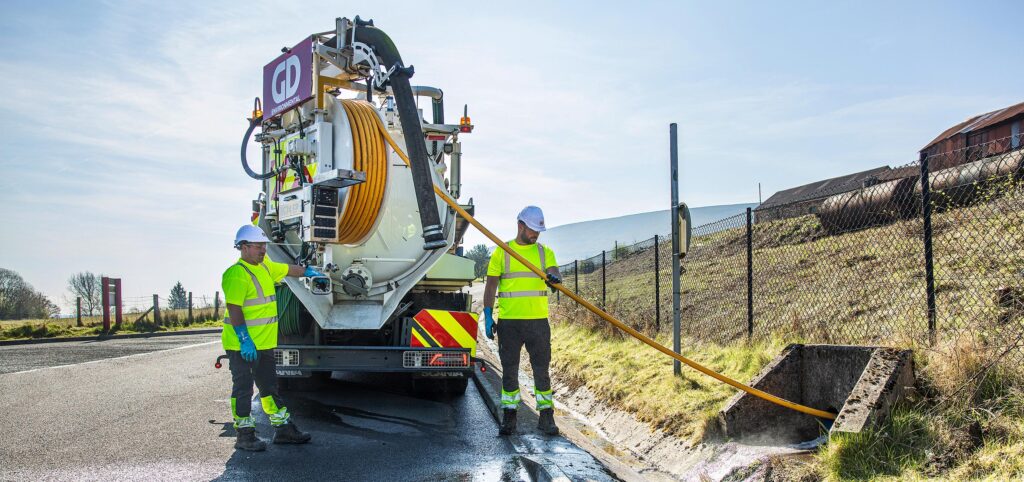
For most commercial drainage issues, high pressure jetting is the most effective solution.
This method uses a controlled stream of water to break down blockages and clear debris from inside the pipe. It doesn’t just push the obstruction further along, it removes the build up from the pipe walls, restoring the system to proper working condition.
Because it cleans the full diameter of the pipe, it also helps reduce the chance of the same problem returning in the near future.
CCTV drain surveys
If a blockage keeps coming back, there’s usually a reason behind it.
A CCTV drain survey allows the inside of the pipework to be inspected in detail. This makes it possible to identify structural issues, persistent problem areas, or anything that wouldn’t be visible from the surface.
In situations where standard clearing methods aren’t enough, this kind of inspection helps ensure the right solution is applied.
Ongoing maintenance
One of the most effective ways to deal with blocked drains is to prevent them in the first place.
Regular maintenance, including scheduled jetting and inspections, keeps the system clear and allows any developing issues to be addressed early. On sites with heavy usage, this approach is often far more practical than waiting for problems to occur.
Reducing the risk of future blockages
While professional services play an important role, day-to-day practices also make a difference.
Managing what goes into the drainage system is key. Avoiding the disposal of fats, oils, and unsuitable materials can significantly reduce the chances of build up forming. On sites with outdoor drainage, keeping debris under control and protecting drain covers can help limit the amount of material entering the system.
Clear processes and awareness among staff can go a long way in preventing avoidable issues.
When to bring in a professional service
If you’re noticing repeated blockages, slow drainage, or any of the warning signs mentioned earlier, it’s usually best to get the system checked sooner rather than later.
A professional service can assess the condition of the drains, identify the cause of the issue, and carry out the appropriate work to resolve it. In many cases, dealing with the problem early keeps things straightforward and avoids more serious disruption.
Blocked drains are a common challenge on commercial sites, but they’re rarely unavoidable.
Most issues develop gradually, whether through build up, heavy usage, or external debris. By paying attention to early signs and taking action at the right time, it’s possible to keep drainage systems working as they should.
Addressing problems early, and maintaining the system properly, is usually the simplest and most cost effective way to avoid larger issues down the line.
For more information take a look at our drainage services or get in touch on the number on the top right of the website.